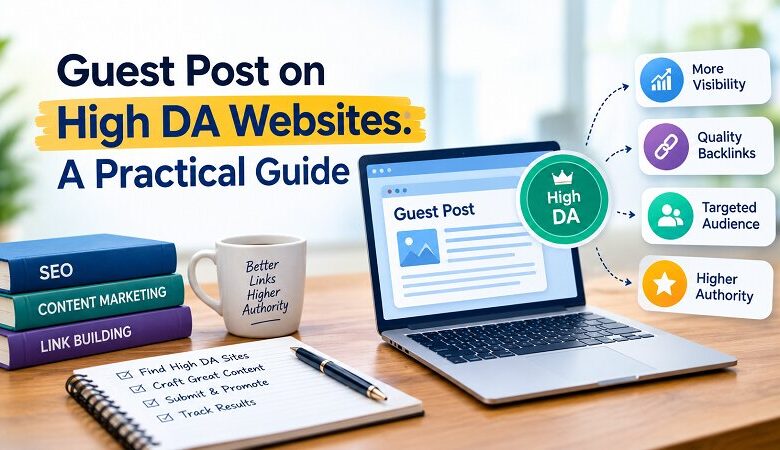
A farm’s online reputation may be built on years of reliable work, but a new customer searching for a local livestock specialist, soil-testing service, or agricultural software provider may know none of that. They start with what they can find online. For organizations in agriculture and animal care, a guest post on high DA websites can help build visibility, but only when the link and the article serve a real purpose.
Backlinks remain one signal search engines can use to understand how pages relate to one another. Yet a high domain-authority score by itself does not guarantee better rankings, qualified visitors, or trust. In 2026, it is more useful to assess a publishing opportunity by its audience, editorial standards, and relevance than by a single metric.
What a strong backlink can—and cannot—do
When a respected publication links to a useful page, that link can help readers discover it and may contribute to search visibility. The surrounding article also gives the reader context: a link to a guide on pasture management, for example, makes sense in a discussion of rotational grazing. A link to an unrelated sales page does not gain value simply because the site has a large authority score.
Domain authority is a third-party estimate, not a Google ranking factor or a promise of results. Scores can help compare sites within a broad research process, but they should not replace closer checks. Look at whether the publication has real readership, covers the subject consistently, and publishes work that is edited rather than assembled to sell links.
Choose relevance before reach
For an animal-health practice, a specialist veterinary publication or a regional farming outlet may be more useful than a general site with a much higher score. The smaller publication may reach people who are actively researching herd health or looking for a local provider. Similarly, an agricultural technology company can contribute a practical article about equipment data, farm cybersecurity, or field sensors to a publication whose readers make those decisions.
Before pitching, ask a few questions:
- Does the site publish original, well-edited articles on topics its audience cares about?
- Do its readers overlap with the people you want to reach?
- Are outbound links relevant and editorially chosen, or does every post appear to be a paid placement?
- Can you offer expertise, evidence, or a useful method that is not already repeated across the site?
These checks help distinguish a genuine contribution from a placement that exists mainly to pass a link. If you are weighing the role of authority metrics and guest publishing in a modern search strategy, this overview of high-DA guest posts and backlinks in 2026 offers a useful point of comparison.
Make the article useful to people first
A credible guest article begins with a reader’s problem, not a company’s preferred keyword. A poultry producer might explain how to set up a biosecurity checklist for seasonal workers. A pet nutrition specialist could clarify how to evaluate ingredient claims, while noting when owners should consult a veterinarian. A farm software team might show how to prepare for a technology rollout when staff have different levels of digital experience.
Specific advice makes the author’s expertise easier to judge. Explain the circumstances in which a recommendation applies, distinguish established guidance from personal experience, and avoid claims that cannot be supported. In animal care and agriculture, inaccurate advice can affect animal welfare, food safety, or a business’s livelihood. That makes careful sourcing and clear limits especially important.


The link should fit naturally into that explanation. Send readers to a relevant resource that expands on the subject, such as a detailed checklist or a practical service page. Avoid forcing exact-match anchor text into a sentence where it sounds unnatural. A useful article may attract readers even if they never click the link, which is a sounder test of quality than link placement alone.
Prepare the assets and measure the outcome
Guest publishing takes more than writing. Editors may need a concise author biography, original images, charts, or diagrams that explain a process. A clear graphic can make topics such as feed planning, equipment layouts, or animal-care procedures easier to understand. If a small business lacks design capacity, it can review options such as finding graphic design clients in 2026 to understand how freelance creative work is being organized. Osdire, for instance, is a marketplace where buyers can hire freelancers across design and other categories; its payment process holds funds during an order and releases them after the delivered work is approved.
After publication, track more than the backlink. Check referral visits, inquiries, newsletter sign-ups, and whether the article continues to send relevant readers over time. Search visibility can change gradually, and one placement rarely explains a major shift on its own. Compare results across several high-quality contributions, while keeping notes on the publication, topic, link destination, and audience response.
A sustainable approach to guest publishing
In 2026, backlinks still matter as part of a broader picture of discoverability, but chasing the highest score is a poor substitute for sound editorial judgment. For agricultural, animal-care, and technology organizations, the strongest opportunities connect useful expertise with a publication that already serves the right community. Build relationships with editors, share practical knowledge, and treat each article as something worth reading on its own. The link then supports the work rather than being the only reason for it.